Why Concrete Strength Requirements Vary Across Construction Projects
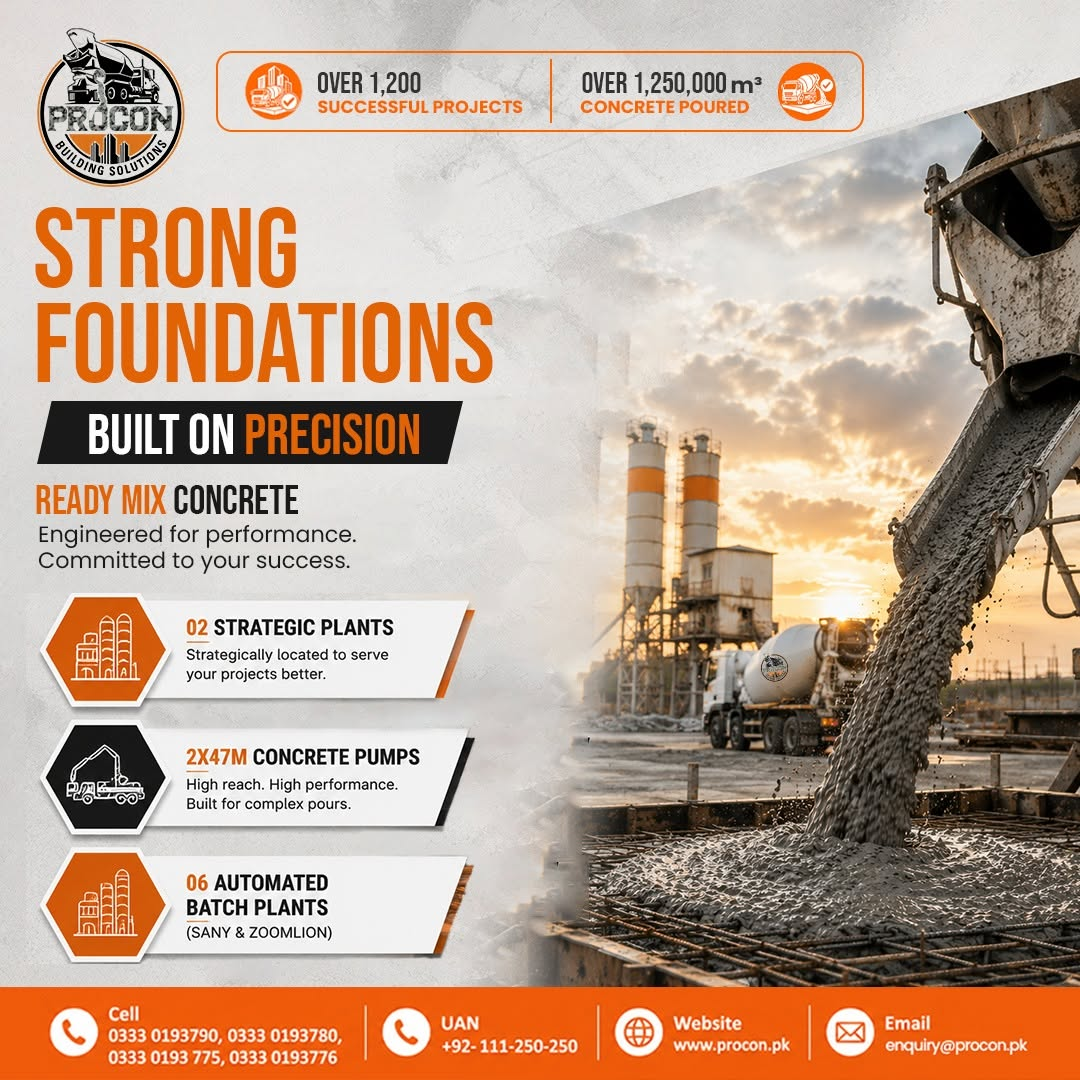
Concrete serves as the core load-bearing material for modern infrastructure, from residential foundations to high-rise towers and heavy industrial facilities. However, structural engineers do not apply a single, uniform strength specification across every build. Compressive strength requirements vary significantly based on load dynamics, environmental exposure, design life, and the specific structural role of each component. Utilizing an incorrect concrete class can compromise structural safety or lead to unnecessary financial expenditure. For developers, engineers, and project managers procuring certified ready mix concrete in Pakistan, understanding the technical factors that dictate variable strength requirements is critical for executing safe and cost-effective construction.
1. Load-Bearing Demands Across Structural Components
Different parts of a single structure support vastly different force loads, requiring tailored compressive strength levels:
- Foundation Footings and Rafts: Substructures transfer the entire dead load of the building along with live occupancy loads into the underlying soil. They require high-density, high-strength formulations to prevent differential settlement.
- Vertical Columns and Shear Walls: Columns in multi-story towers experience immense axial compression and lateral wind forces. They demand high-compressive-strength mixes to maintain slim column profiles while supporting upper floors.
- Elevated Slabs and Suspended Beams: Horizontal members support bending moments and tensile stresses. They rely on flexural-optimized strength configurations combined with precise rebar placement to prevent excessive deflection.
2. Structural Scale and Operational Building Classification
The overall scale, intended use, and occupancy level of a building directly influence the minimum required concrete grade:
- Low-Rise Residential Units: Standard single-story or double-story homes typically utilize medium-strength nominal or design mixes (such as M15 to M20 grades) that satisfy lower load requirements.
- Commercial and High-Rise Towers: Multi-story structures require high-grade design mix concrete (such as M30 to M60 and above) engineered through precise laboratory trials to handle cumulative vertical stresses.
- Industrial Facilities and Infrastructure: Heavy manufacturing plants, bridge decks, and highway pavements demand specialized high-performance mixes designed to resist heavy dynamic machinery loads and high-impact traffic.
3. Environmental Exposure and Site-Specific Conditions
Ambient environmental conditions and soil chemistry dictate the durability and strength thresholds needed to protect concrete matrices over time:
- Coastal and Marine Environments: Coastal sites exposed to airborne chlorides and high humidity require higher compressive strengths and low water-cement ratios to prevent internal rebar corrosion.
- Subterranean Soil Chemistry: Foundations poured in soils containing high sulfate or alkali concentrations require specialized cement blends and high-density matrices to prevent chemical decay.
- Thermal Management in Mass Pours: Poured concrete in high ambient heat requires controlled hydration rates to prevent thermal cracking during curing, ensuring long-term structural integrity.
4. Quality Control Verification Through Computerized Batching
Delivering customized strength classes across varied project specifications requires precise industrial production rather than manual site-mixing:
- Gravimetric Material Batching: Digital batching plants weigh cement, sand, coarse aggregate, water, and chemical admixtures by mass to guarantee exact mix proportions.
- Admixture Integration: Superplasticizers and mineral admixtures are tailored to enhance strength and workability without increasing water content.
- Laboratory Crushing Tests: Standardized cube sampling and 7-day and 28-day compression testing confirm that delivered concrete meets or exceeds structural design specifications.
Conclusion
Concrete strength requirements vary across construction projects due to differing load profiles, building scales, environmental exposures, and component functions. Matching specific compressive strength classes to each structural application ensures maximum safety, regulatory compliance, and cost efficiency. Relying on engineered, laboratory-tested batching eliminates guesswork and protects long-term asset value. To review custom mix designs, verify compressive strength specifications, and order certified ready mix concrete in Pakistan, connect with the technical concrete specialists at Procon today.
Survey No. 423, Ibrahim Hydri, behind Bol head quarter, Korangi creek road, Karachi-74900
+92 21 111 250 250