Concrete for Commercial Foundations: Important Quality Considerations
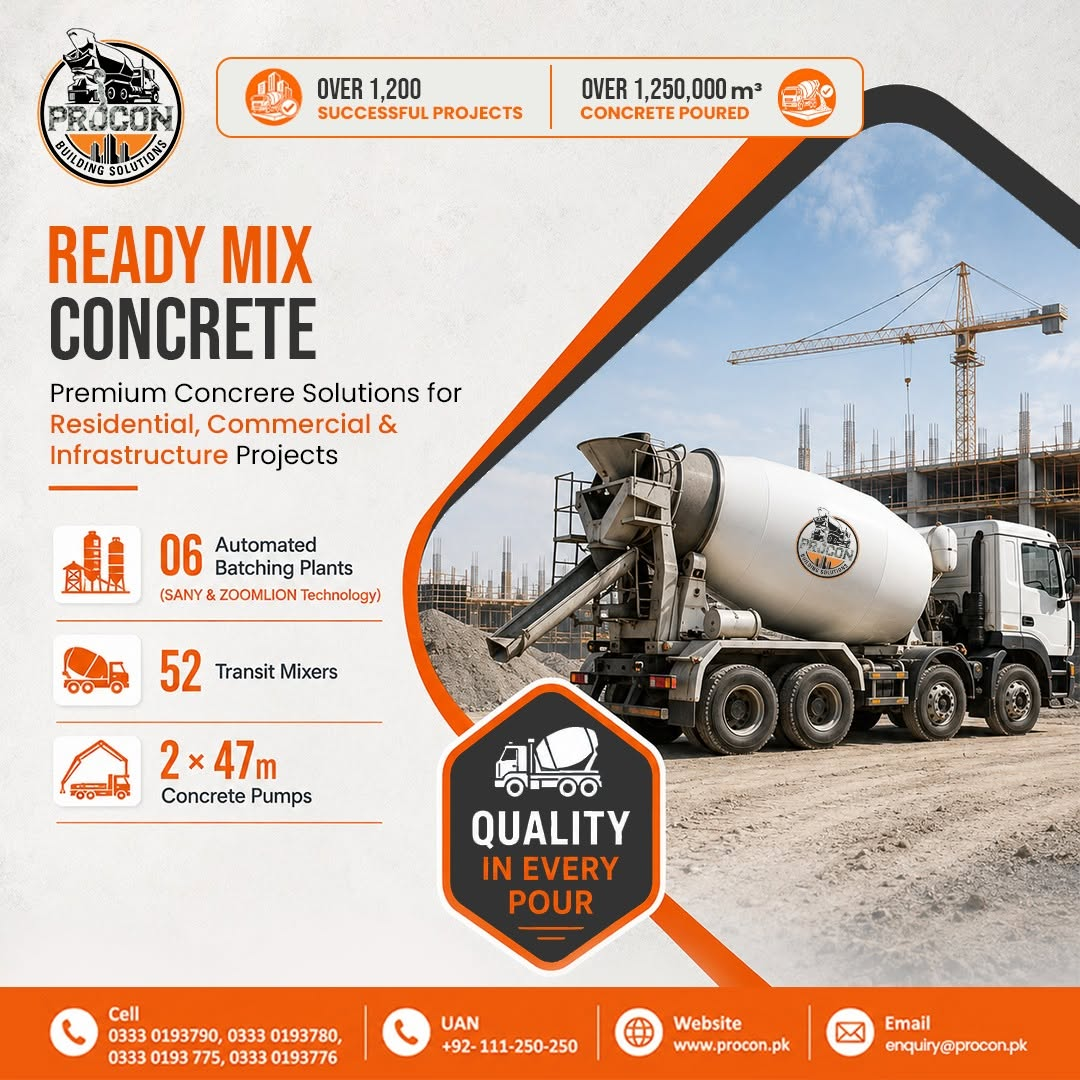
Commercial real estate assets—including multi-story shopping malls, office towers, industrial logistics hubs, and mixed-use complexes—demand uncompromising structural stability. At the core of any commercial build is its foundation, which must safely support immense static and dynamic loads while resisting harsh subterranean soil environments for decades. Achieving the structural integrity required for heavy raft slabs, pile caps, and grade beams depends directly on the quality, proportioning, and consistency of the concrete matrix. Traditional, hand-mixed site concrete introduces unpredictable variances in water-cement ratios and compressive strength that can endanger structural safety. Partnering with automated batching plants and local suppliers of ready made concrete Karachi ensures commercial foundation pours meet strict engineering tolerances, international building codes, and municipal safety standards.
1. Precise Compressive Strength and Load-Bearing Capacity
Commercial foundations endure continuous vertical, lateral, and dynamic stresses that require precise material engineering:
- Computerized Weigh-Batching: Factory batching facilities utilize digital scales to measure cement, coarse aggregates, sand, and liquid admixtures to exact design tolerances, eliminating the strength variations inherent in manual site-mixing.
- Tailored Strength Grades: Structural engineers specify exact compressive strength classifications (such as 30 MPa, 40 MPa, or higher) designed specifically to handle heavy axial load transfers from upper columns and shear walls.
- Uniform Core Hydration: Controlled batching ensures uniform hydration throughout massive foundation sections, providing predictable 7-day and 28-day compression cylinder test results.
2. Low Permeability and Subterranean Chemical Resistance
Subterranean foundation elements remain in direct, continuous contact with underground moisture, reactive soils, and saline groundwater:
- Optimized Water-Cement Ratios: Maintaining a low water-cement ratio creates an ultra-dense concrete matrix with minimal capillary pores, blocking moisture, airborne chlorides, and carbon dioxide ingress.
- Sulfate-Resisting Formulations: Incorporating specialized sulfate-resistant cement or supplementary cementitious materials (like slag, fly ash, and silica fume) shields subterranean footings from chemical degradation.
- Steel Rebar Protection: Preventing subterranean water penetration protects internal structural steel reinforcement against rust, expansion, and premature concrete spalling.
3. High-Volume Logistical Planning and Cold Joint Prevention
Commercial raft foundations often require continuous mass pours spanning hundreds of cubic meters that must proceed without interruption:
- Elimination of Cold Joints: A cold joint forms when new wet concrete is poured against a layer that has already begun to set, creating a permanent structural weak plane prone to cracking and water leakage.
- Synchronized Fleet Logistics: Certified ready-mix suppliers deploy managed transit mixer fleets to ensure an uninterrupted, scheduled supply of wet concrete to active site pump hoppers.
- Controlled Setting Times: Plant-dosed retarding admixtures extend concrete workability during high-ambient-temperature pours, allowing site crews adequate time to place, consolidate, and vibrate mass footings properly.
4. Enhanced Workability for Dense Steel Reinforcement
Commercial foundation designs feature dense grids of heavy steel rebar that require fluid, highly cohesive concrete formulations:
- Controlled Slump and Flowability: Superplasticizers increase slump and workability without adding excess water, allowing concrete to flow effortlessly around complex rebar cages.
- Defect Elimination: Cohesive, pumpable mixes fill every corner of foundation formwork, completely eliminating internal air voids, pipe clogging, and surface honeycombing.
Conclusion
Constructing safe, durable commercial foundations requires meticulous quality control at every stage—from raw material batching to on-site compaction. Utilizing automated, plant-batched concrete replaces manual site-mixing inconsistencies with certified engineering precision, protecting commercial investments against structural settlement, water seepage, and chemical wear. Synchronizing factory production with mechanized site placement guarantees that foundation pours proceed safely, efficiently, and on schedule. To explore certified mix designs, technical strength formulations, and reliable batching services for your next commercial project, learn more about ready made concrete Karachi today.
Survey No. 423, Ibrahim Hydri, behind Bol head quarter, Korangi creek road, Karachi-74900
+92 21 111 250 250