Ready-Mix Concrete for Infrastructure Projects: Key Considerations
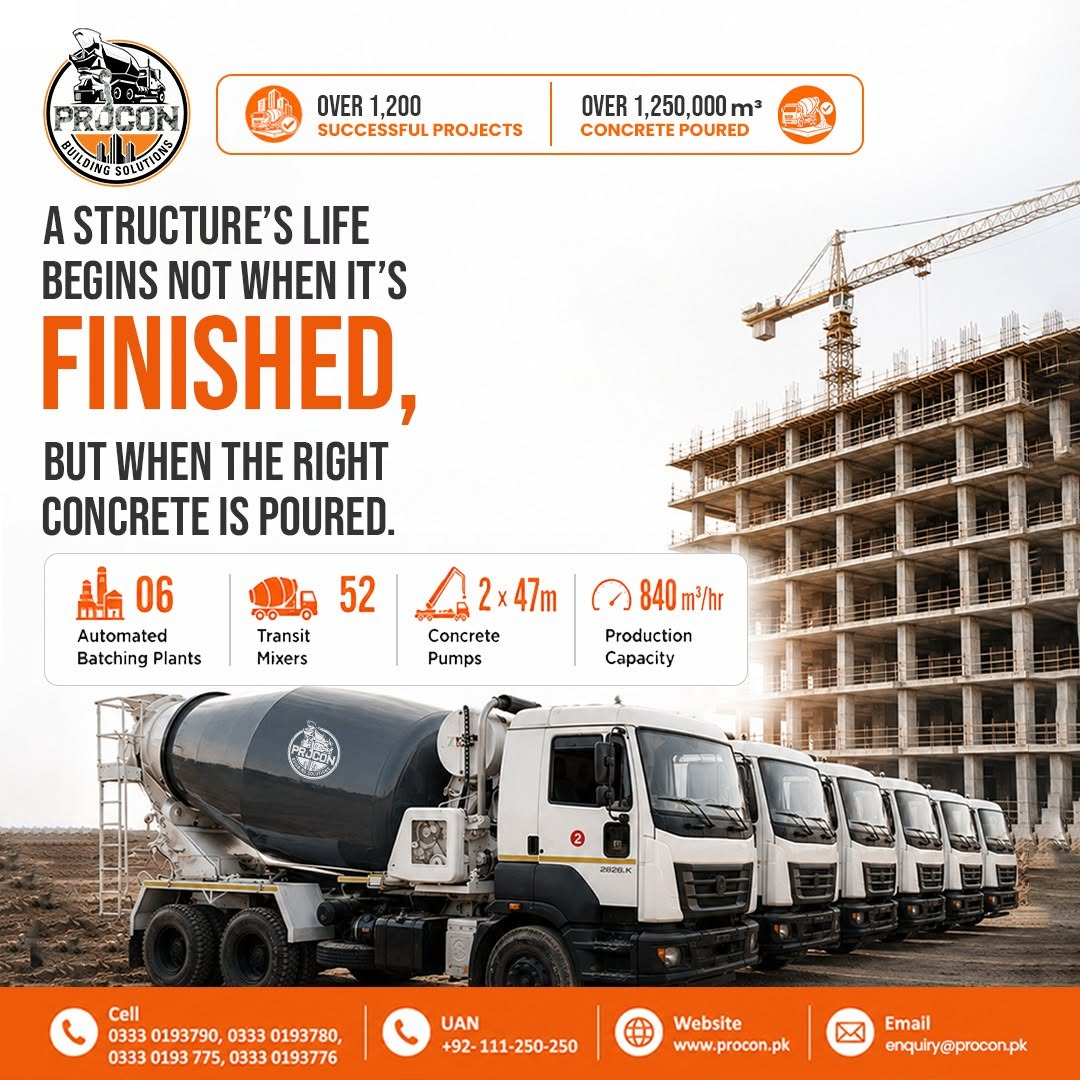
Infrastructure projects—such as highways, flyovers, bridges, dams, and rapid transit networks—serve as the foundation of economic growth and urban mobility. Unlike standard residential construction, infrastructure builds must withstand extreme mechanical loads, harsh environmental conditions, and decades of continuous operational stress. Achieving the required durability and structural integrity begins with material selection. Factory-controlled ready mix concrete in Pakistan has become the industry standard for major engineering works, offering superior quality control, consistency, and placement efficiency compared to site-mixed alternatives.
1. Custom Mix Designs and Specialized Performance
Infrastructure assets are rarely built using standard off-the-shelf concrete formulas. Each structural element requires customized mix proportions tailored to its specific load requirements and exposure conditions:
- High Compressive Strength: Heavy load-bearing components, such as bridge piers, highway girders, and dam abutments, demand high-grade concrete (such as C40, C50, or higher) engineered to resist heavy traffic and structural stress.
- Chemical and Sulfate Resistance: Below-grade foundations, marine structures, and culverts exposed to saline soil or groundwater require specialized cements and admixtures to prevent chemical deterioration.
- Low Heat of Hydration: Mass pours for thick raft foundations or bridge footings must utilize supplementary cementitious materials like fly ash or slag to control internal temperatures and prevent thermal cracking.
2. Uncompromising Quality Assurance and Batch Consistency
Maintaining structural safety across large-scale infrastructure requires absolute material consistency across thousands of delivery loads:
- Automated Computerized Batching: Modern batching plants dynamically measure aggregates, sand, cement, water, and admixtures by weight, removing human error and ensuring uniform strength across every batch.
- Strict Raw Material Testing: Aggregates undergo precise sieve analysis, while water purity and cement setting times are continuously tested in certified laboratories prior to mixing.
- Verifiable Testing Protocols: Standardized cube sampling at 7-day and 28-day intervals provides mandatory compressive strength documentation for project consultants, structural auditors, and municipal inspectors.
3. Logistical Coordination and Continuous Supply Management
Massive infrastructure pours—such as casting flyover deck slabs or continuous pavement layers—cannot tolerate supply chain interruptions without risking structural defects:
- Eliminating Cold Joints: Interrupted concrete deliveries cause previously poured layers to set prematurely, forming weak interface planes known as cold joints. Synchronized transit fleet dispatch ensures seamless, continuous pours.
- Managing Slump during Transit: Experienced dispatchers adjust chemical retarders and transit routes dynamically to preserve workability during long trips through congested urban corridors.
- Redundant Batching Facilities: Major infrastructure suppliers utilize multiple interconnected batching plants to guarantee continuous supply even during unexpected equipment maintenance.
4. Accelerated Construction Timelines and Environmental Efficiency
Executing civic infrastructure quickly minimizes public disruption, reduces traffic congestion, and lowers total project overhead:
- High-Speed Placement via Pumping: Combining factory-batched concrete with high-capacity boom or line pumps accelerates placement speeds, allowing crews to pour hundreds of cubic meters per hour.
- Optimized Worksite Footprint: Eliminating raw aggregate stockpiles and manual mixing stations frees up critical road space and reduces dust and noise pollution on active job sites.
- Trusted Strategic Partnerships: Collaborating with established building material providers like Procon gives engineering teams access to certified batching precision, specialized mix designs, and dependable logistics tailored to major infrastructure developments.
Conclusion
Ready-mix concrete is a vital enabler of modern infrastructure development, providing the strength, consistency, and durability needed for long-lasting civil assets. By leveraging computerized batching accuracy, specialized mix formulations, and synchronized fleet logistics, engineering teams can complete complex public works safely and efficiently. Investing in pre-tested, factory-controlled concrete eliminates material uncertainty, lowers long-term maintenance costs, and ensures critical infrastructure serves communities reliably for generations. To secure certified mix formulations and optimize your infrastructure logistics, explore professional solutions for ready mix concrete in Pakistan today.
Survey No. 423, Ibrahim Hydri, behind Bol head quarter, Korangi creek road, Karachi-74900
+92 21 111 250 250