How Ready-Mix Concrete Supports Sustainable Construction Practices
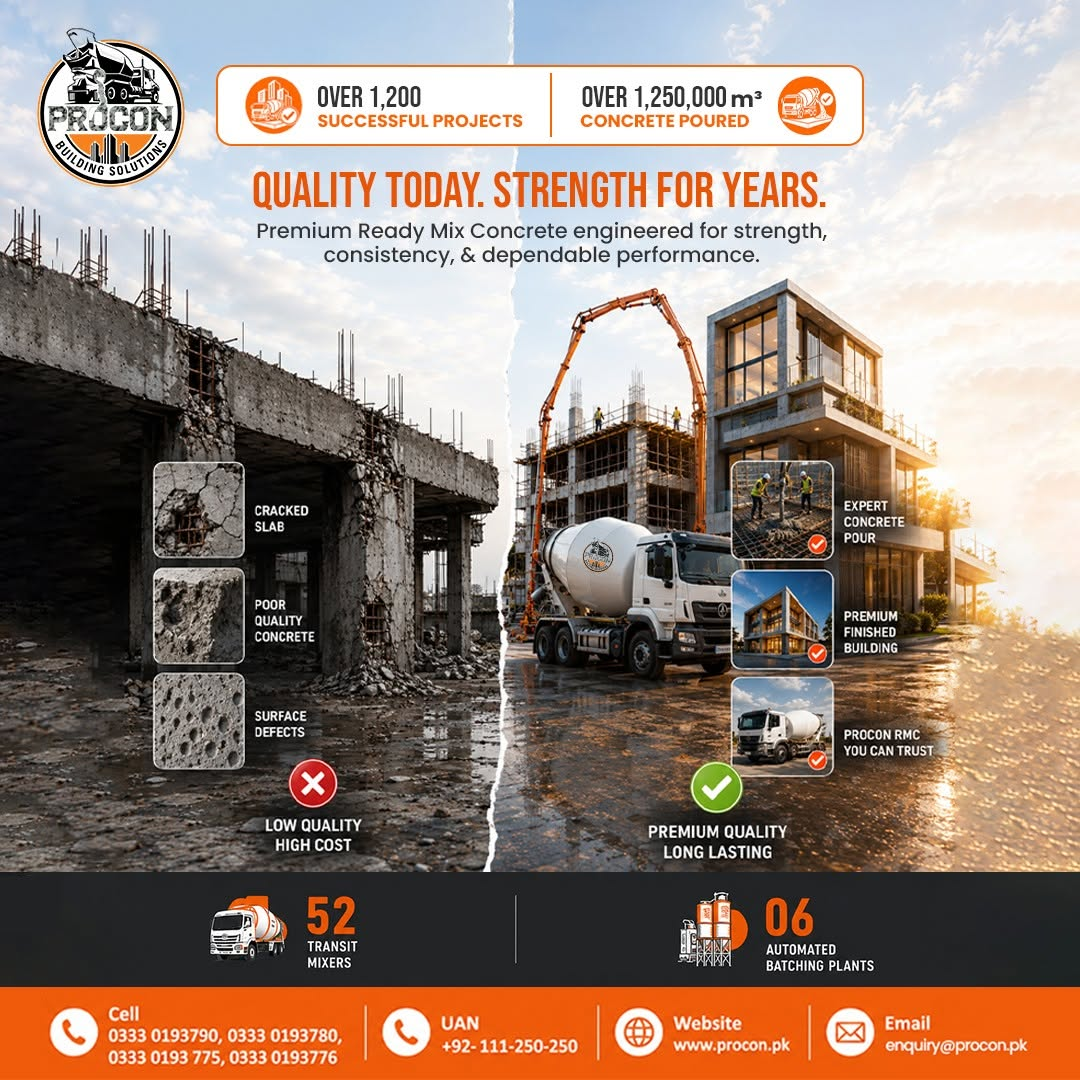
Sustainable building methodologies and eco-friendly structural design have transitioned from optional industry trends to essential core requirements across the global construction sector. Urban developments, commercial complexes, and modern residential infrastructure require building solutions that significantly reduce carbon emissions, eliminate material waste, and optimize resource efficiency. Conventional, manual job-site concrete mixing is notoriously resource-intensive, often generating substantial material scrap, air pollution, and unpredictable batch performance. Adopting factory-controlled, computerized ready mix concrete in Karachi gives developers and civil engineers a sustainable, scientifically managed material alternative that lowers carbon footprints, preserves natural raw inputs, and ensures long-term structural resilience.
Environmental Footprint of Traditional Site Mixing
Conventional site-mixing techniques present severe environmental and operational challenges that run counter to modern sustainable building standards:
- High Raw Material Spoilage: Aggregate mounds and sand stockpiles left exposed on job sites suffer heavy loss from rain runoff, wind erosion, and vehicle contamination.
- Severe Dust and Particulate Pollution: Hand-dispensing dry cement sacks and manually shoveling dry aggregate generates localized airborne particulate matter, lowering site air quality.
- Uncalibrated Water Usage: Manual mixing lacks precise water control, often wasting vast quantities of water to achieve temporary site workability while weakening overall matrix density.
Key Ways Factory-Batched Concrete Promotes Sustainability
1. Computerized Batching and Zero Material Waste
Automated ready-mix manufacturing plants utilize high-precision digital load cells and real-time aggregate moisture sensors to weigh every ingredient to exact decimal tolerances. Digital precision eliminates batch rejections caused by inaccurate manual measurement. Furthermore, ordering exact volumetric quantities calculated directly from structural blueprints completely eliminates raw material stockpiling and site clutter.
2. Integration of Supplementary Cementitious Materials
Cement manufacturing is a major source of industrial carbon emissions. Modern batching facilities lower embodied carbon by replacing a portion of traditional Portland cement with industrial byproducts such as fly ash, silica fume, and ground granulated blast-furnace slag (GGBS). Integrating these supplementary binders refines the internal capillary structure of the concrete, improving matrix density and chemical resistance while reducing reliance on virgin clinker.
3. Reduced Water Consumption and Closed-Loop Recycling
Water conservation is a critical pillar of sustainable engineering. Factory-controlled production utilizes automated dosing systems to incorporate high-range water reducers (superplasticizers). These admixtures achieve maximum flowability and slump retention using minimal mixing water. Additionally, modern plants employ closed-loop water recycling systems that reclaim and filter wash water from equipment cleaning to be reused in future production.
4. Optimized Energy Usage and High Durability
Factory batching plants operate high-efficiency, heavy-duty mixers that require significantly less energy per unit volume than dozens of small site mixers operating continuously over long hours. Moreover, producing ultra-dense, low-permeability concrete extends the lifespan of built structures, preventing premature deterioration, steel rebar corrosion, and the environmental cost of early structural demolition and replacement.
Financial and Environmental Benefits for Developers
Sourcing sustainable building materials yields direct long-term economic advantages. Minimizing raw material loss and eliminating waste disposal fees directly lowers project expenditures. Furthermore, structures built with low-permeability, durable concrete require far less maintenance over their operational lifespans, lowering lifecycle maintenance costs while meeting modern green building certification parameters.
Conclusion
Advancing sustainable construction requires adopting automated manufacturing precision, efficient resource usage, and environmentally responsible material management. Moving away from wasteful, unpredictable site-mixing methods protects natural resources, reduces carbon footprints, and prevents site pollution. Partnering with certified batching plants and sourcing custom-formulated, eco-friendly materials from trusted suppliers of ready mix concrete in Karachi ensures every structural pour balances high load capacity with environmental sustainability, financial efficiency, and lasting structural integrity.
Survey No. 423, Ibrahim Hydri, behind Bol head quarter, Korangi creek road, Karachi-74900
+92 21 111 250 250