By YUANEN
A lining that looks smooth when a delivery bag is empty can rub against a rigid tray corner once the bag is loaded. If that corner contacts a seam on every trip, changing the lining material alone may leave the cause of the wear in place. Before approving a sample, locate the contact and see how it changes through loading, carrying and cleaning.
Map the contact points
Use the trays and containers the operator actually packs. Measure the protruding rims, lid tabs and feet as well as the nominal tray dimensions. In an empty sample, identify the seams and folds at the entrance, base and lower corners. Slide the widest tray in without tilting it. Mark where a rim catches or a corner presses into a fold. Repeat with the heaviest intended pack-out. A large light tray may rub at the opening while a smaller heavy one can concentrate load at the base.
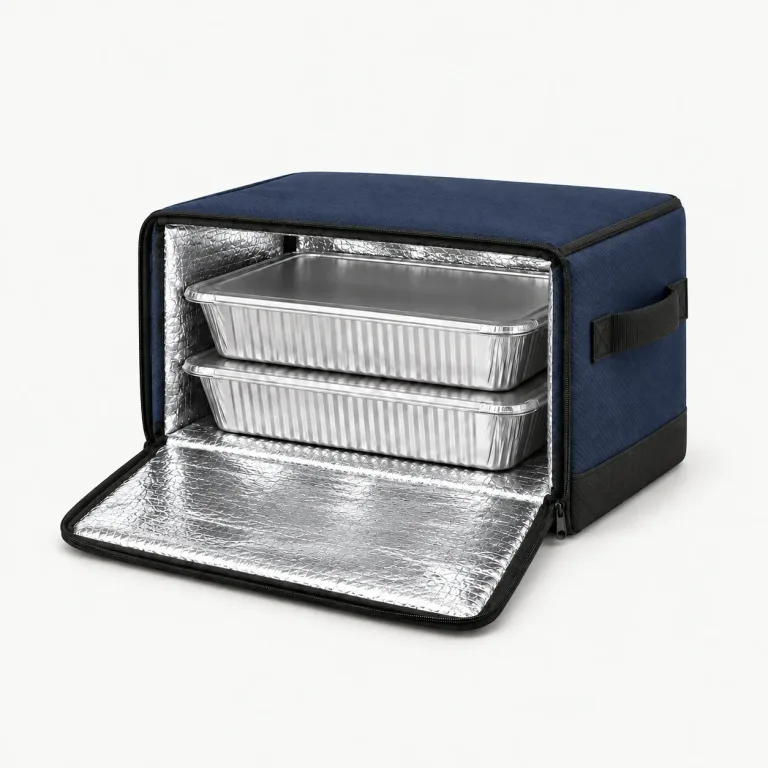
YUANEN product example. Use the opening and tray path as references when mapping contact points on the sample you are buying.
Compare a construction change under the same load
If contact occurs only during entry, try a wider usable opening or a different loading direction before specifying a different laminate. If the tray shifts against a seam during transfer, compare a change to the base support, the load restraint or the seam location. Each option has a cost. A stiffer support can make storage and cleaning less convenient. Extra clearance can help insertion but increase movement on smaller orders.
For each candidate, load the same containers to the same weights and repeat the same loading and set-down sequence. Inspect the marked positions in good light between runs. Record where you see scuffing, lifted lining, cuts or an opening seam. Keep the operator and route consistent where practical. If the bag will be cleaned between shifts, use the approved method and inspect the same points again after drying.
Agree what constitutes failure
Set the number of handling and cleaning cycles before running the comparison. Agree whether superficial marks are acceptable and which changes, such as exposed underlying material or a seam that begins to open, reject the sample. Record the sample identifier, container geometry, load weight, cycle count and photos of each inspected point. The test compares the trial constructions under your conditions. It does not establish a universal service life or temperature rating.
The front-opening insulated catering carrier example shows a tray loading path you can discuss with your supplier. Keep the approved tray path, lining construction and seam details in the purchase specification so the receiving team can compare production units with the accepted sample.